
A letter of recommendation is still a vital part of the recruitment process, even as recruitment becomes more data-driven. Over 80% of Fortune 500 companies use background screening services to manage compliance and reduce hiring risks. These services primarily cover employment verification (35%) and criminal record checks (40%), indicating an emphasis on due diligence in candidate evaluation.
You may have read and filed multiple letters of recommendation for employees in your HR role. This article explores what they entail and how to write one. It also includes four free letter of recommendation templates you can adapt to advance the careers of former employees who have contributed meaningfully to your organization.
Contents
What is a letter of recommendation for an employee?
4 sample letters of recommendation for an employee
1. General letter of recommendation
2. Character reference letters
3. Professional letter of recommendation
4. Recommendation letter for promotion
How to use our letter of recommendation templates
How to write a letter of recommendation for an employee
Legal considerations when providing a reference letter

What is a letter of recommendation for an employee?
A letter of recommendation for an employee, often simply called a reference letter, describes a current or former employee’s skills, work ethic, and performance. Employees usually request one when applying for a new job, promotion, academic program, or professional opportunity.
While many organizations rely on reference checks, a well-written recommendation letter can still be valuable. It provides a concise summary of the employee’s contributions and helps prospective employers understand how the person works in practice.
Why HR may need to provide employee letters of recommendation
As an HR professional, you receive requests to write letters of recommendation for employees because you can connect with different managers and colleagues across the organization to get a full picture of a former employee.
You may also need to provide managers or supervisors with guidance around the different types of reference letters and what they should include in order to communicate effectively on an individual’s behalf.
If a former employee genuinely added value to your organization, writing a positive letter of recommendation from an employer is a smart move. It helps preserve a strong relationship in case you want to rehire them later, supports your employer brand through a network of like-minded professionals, and can improve the offboarding experience.
4 sample letters of recommendation for an employee
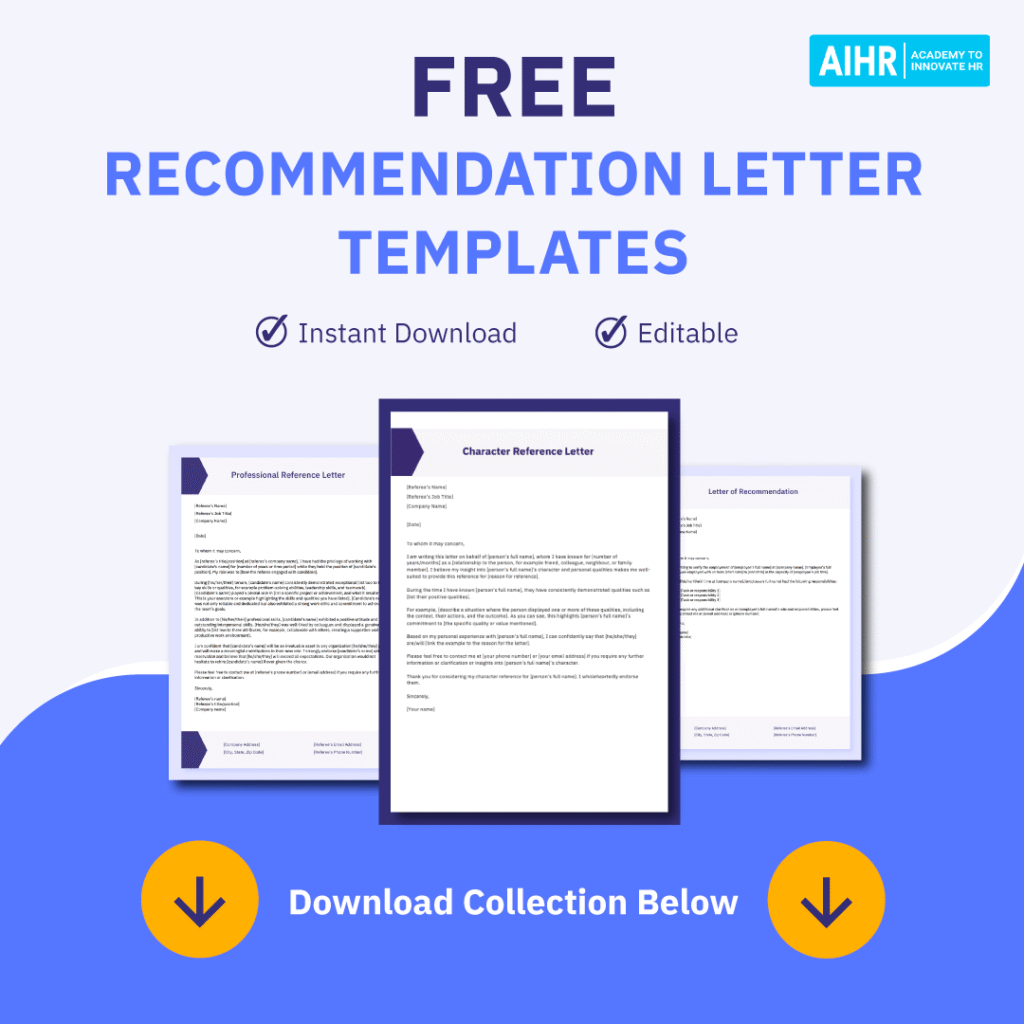
Below are four common types of employment letters of recommendation. In each instance, we’ve outlined when you’d use this letter type and provided a free template download you can adapt for your organization.
- General letter of recommendation
- Character reference letter
- Professional reference letter
- Recommendation letter for promotion
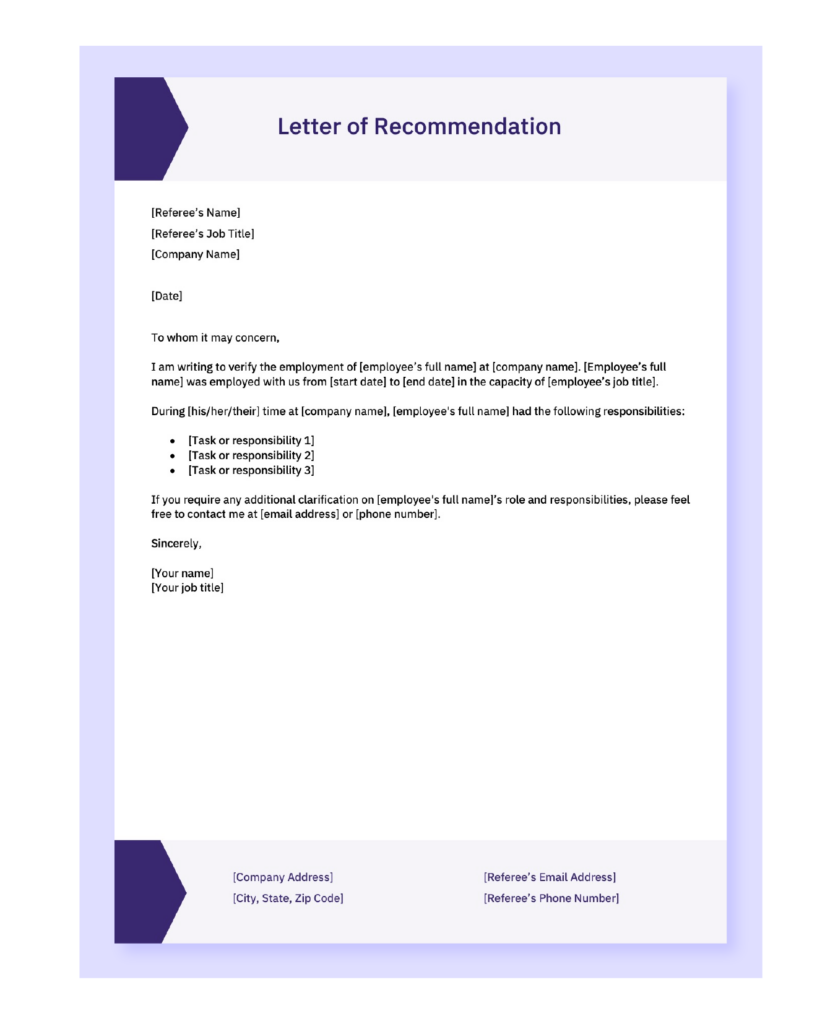
1. General letter of recommendation example
A general or generic recommendation letter for employee confirms an individual’s previous employment details without providing an assessment of their performance or abilities. This could be because the prospective employer did not request or require further details . If a past employee’s performance was poor, HR may provide such a letter, as it allows them to focus only on facts without having to endorse the employee.
2. Character reference letter example
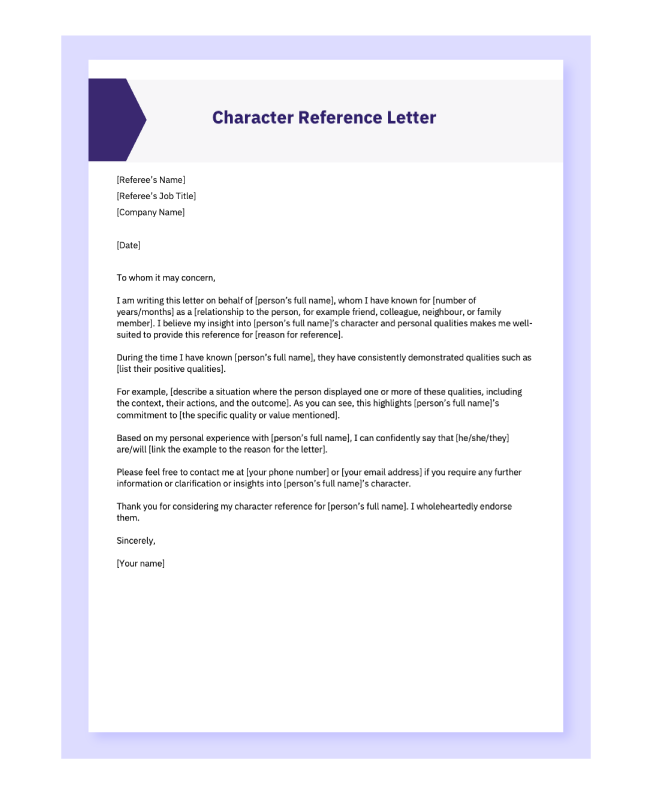
A character letter of recommendation, also known as a personal letter of recommendation, confirms an individual’s character, values, and personal qualities. In the context of a job application, a candidate’s professional contact of choice (e.g., former manager) would normally write this letter.
3. Professional reference letter example
A professional letter of recommendation, often referred to as an employment reference letter, provides an assessment of a person’s work-related qualifications, skills, performance, and accomplishments. A professional contact, such as a former colleague or manager, usually writes this letter for a former employee applying for a job.

4. Recommendation letter for promotion example
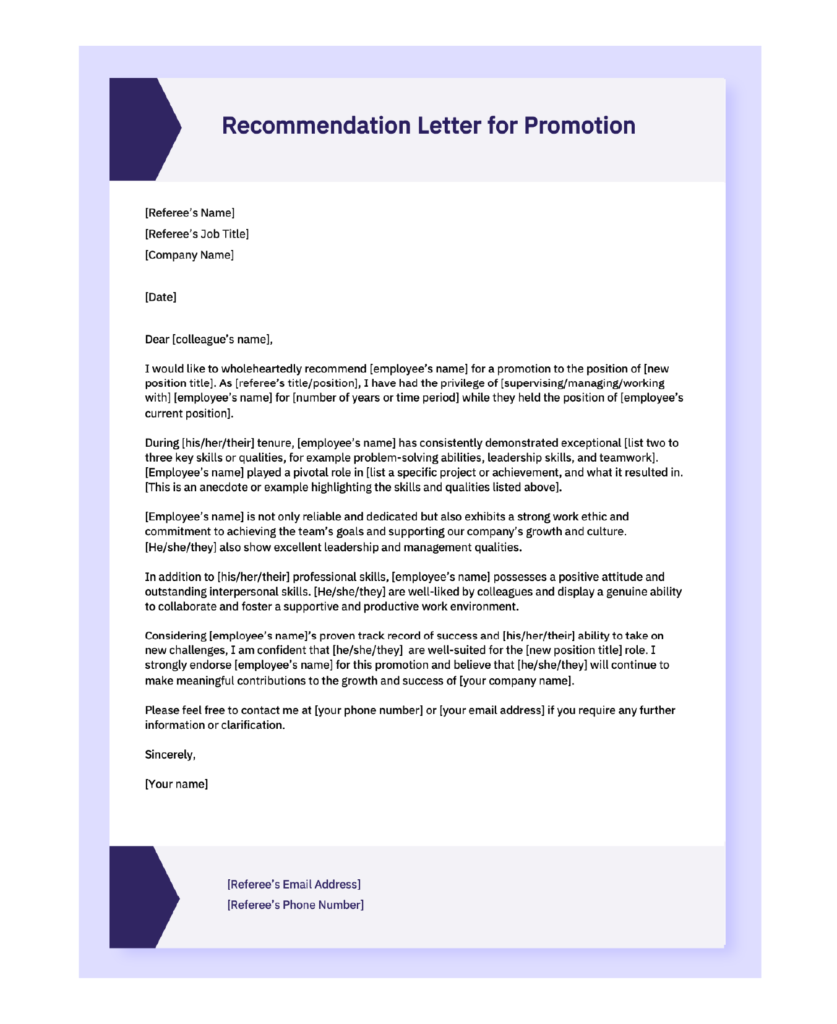
A recommendation letter for promotion is a written internal endorsement by a supervisor, manager, or colleague supporting an employee’s candidacy for an internal promotion. A manager could recommend the promotion, or a department or leadership team could request this letter after identifying the individual as a potential candidate for promotion.
Letter of recommendation format
A strong letter of recommendation for an employee usually follows a simple structure:
- Introduction and relationship to the employee: Open by stating who you are, your job title, and how you know the employee. Explain whether you managed them directly, worked with them as an HR partner, or collaborated in another professional capaci
- Employment details: Include the employee’s job title and dates of employment. This gives the reader context and confirms the individual’s work history at your organization.
- Key strengths and qualifications: Highlight two or three strengths that are relevant to the role or opportunity the employee is pursuing. These might include leadership, problem-solving, teamwork, communication, or technical expertise.
- Specific examples of performance: Support your endorsement with one or two brief examples that show the employee’s impact. Mention a project, achievement, or measurable result that illustrates their contribution.
- Character and work style: Describe how the employee approaches their work. You can mention qualities such as professionalism, reliability, initiative, adaptability, or collaboration.
- Closing endorsement: End the letter by summarizing your recommendation and offering to provide further information if needed.
Build the skills you need to support your workforce throughout the entire employee life cycle. Letters of recommendation are important, but so are the policies and processes surrounding them.
In AIHR’s HR Generalist Certificate Program, you’ll learn how to:
✅ Set up policy frameworks and reward processes to keep employees engaged
✅ Navigate challenging conversations and give effective feedback
✅ Structure HR operations that scale with growing businesses.
How to use our letter of recommendation templates
A letter of recommendation template can save time and help ensure you deliver valuable letters to former employees. To write a great letter of recommendation, keep the following top of mind while you work through the templates:
Add context
Avoid generic praise and vague phrases or sentences. Briefly explain how you know the employee, and include concise examples that display their strengths or contributions. Specific details and evidence of their work ethic make the recommendation more credible. This will also help the prospective employer understand why your opinion carries weight, which adds further credibility to the letter.
Adapt the template
Treat templates as a guide, instead of a fixed format to adhere strictly to. Adjust the wording, structure, or length of the letter to suit your organization’s style, as well as the employee’s role and contributions. A tailored letter will feel more personalized and genuine, and as such, more relevant to the person reading it. This will also help the letter stand out from other letters of recommendation they may get.
Be accurate and honest
A recommendation letter is a reflection of you and your organization. Keep your comments factual and balanced, and avoid overstating skills or achievements. A clear, truthful letter is more useful than one filled with exaggerated claims. For instance, instead of saying the employee would be a “wonderful addition to your company”, you could say “their work ethic shows they are reliable and trustworthy” (followed by an example of this).
Tailor the letter where possible
If you know the role, organization, or programme the employee is applying for, adjust the letter within that context. Highlight the employee’s skills and experience that are the most relevant to the career opportunity in question. This makes it easier for the prospective employer to understand why the candidate is a strong fit for the specific role, as well as the organization as a whole.
How to write a letter of recommendation for an employee
If you are interested in helping a former employee stand out from the crowd, here are six steps to writing a powerful letter of recommendation.
Step 1: Use a professional format
Use a standard business letter format with your contact information, the date, and, if possible, the recipient’s name, job title, and organization. If the letter is for general use, opening with “To whom it may concern” or “Dear Hiring Manager” is acceptable. Keep the tone professional and the language clear. Use a readable font such as Arial, Calibri, or Times New Roman. A concise, well-organized letter makes the strongest impression.
Step 2: Explain why you’re qualified to write the letter
The letter of recommendation is not about you, but in a crucial way, your credibility influences the candidate’s credibility. Help the recipient understand who you are, your professional relationship with the candidate (you may have been their direct manager, team lead, or HR partner), and why you are writing this reference letter. You can also mention how long you worked together to provide further context.
Step 3: Describe the candidate’s skills, work habits, and accomplishments
Think of this as the ‘meat’ of the letter of recommendation. This is the content the recipient is really interested in. Outline the employee’s job title, main responsibilities, and two or three key strengths relevant to the role they are pursuing (e.g., leadership, problem-solving, technical expertise). The details you include will help the reader gauge whether the employee is a good fit for the role and the organization’s culture.
Step 4: Use specific examples
Anecdotes not only show you had a professional relationship with the candidate, but they’re also a memorable way to illustrate the candidate’s skills and qualities. Use brief examples to illustrate their strengths; mention a project they contributed to, a challenge they handled well, or a measurable result they helped achieve. This can also lend validity to any information the employee may have already shared with the potential employer.
Step 5: Conclude the letter with a formal closing
End your letter by reiterating your confidence in the candidate’s ability to add value to the prospective employer and team/department in their new role. Be sure to also provide your contact details, and invite the recipient to reach out to you for further information. Finally, end the letter with a salutation that includes your name and designation.
Step 6: Proofread your document
This is an essential step. A document containing typos and other mistakes looks highly unprofessional and could even damage the credibility of the former employee you’re trying to help. Conversely, an error-free document with the correct format and spelling shows you care about the individual for whom you’re writing the letter, and reflects well on them at the same time.

Legal considerations when providing a reference letter
As a letter of recommendation comments on an individual’s character, skills, and work ethic, it carries legal responsibilities. As an HR professional, you should ensure that all references are fair, accurate, and compliant with employment law, protecting both the organization and the letter writer. Be aware of the following risks:
- Defamation: Defamation occurs when a false statement harms someone’s reputation. If inaccurate information in a reference letter affects a former employee’s prospects, it could lead to legal action. To prevent this, stick to facts and observations based on your direct experience.
- Discrimination: Most countries prohibit discrimination in employment. Reference letters should not mention protected characteristics like sex, ethnicity, nationality, age, or disability. Focus instead on the employee’s work performance, behavior, and professional achievements.
How to minimize legal risks
Here are a few practical ways to reduce risk when writing references:
- Educate managers and supervisors on the legal implications of providing letters of recommendation, particularly the risks of defamation and discrimination.
- Develop a clear, detailed policy for writing letters of recommendation within the organization. Address potential legal risks and provide guidance on how to write fair, accurate, and legally compliant letters.
- Encourage a culture of open communication between HR and managers. Let managers know you can provide them with recommendation letter templates and review their drafts before they send their letters.
- If your company has a legal department, consult with them before any recommendation letter request that requires the writer to share sensitive information that could pose legal risks.
How to handle difficult situations
Sometimes, the best option is to decline a request for a recommendation letter. If you cannot honestly provide a positive endorsement, or if company policy limits references, it’s better to say “no” politely. A neutral response is usually preferable to writing a weak or negative letter.
If you’re concerned about offending an individual because you can’t write them a letter of recommendation, you can politely and diplomatically decline the request in the following ways:
- If you don’t know the person well: “I’m sorry, but I do not feel I have worked with you long enough or know you well enough to provide you with an accurate and thorough recommendation.”
- If you do know the person well: “Thanks for asking me to write you a letter of recommendation. However, I don’t feel I’m the best person to do so. Perhaps you can ask [name someone who may feel more comfortable] instead.”
- If there was a performance issue: “I appreciate your request for a reference letter. However, due to performance concerns during your employment with [company name], I don’t believe we are best placed to provide you with one. I wish you the best of luck in your future endeavors.”
- If your company doesn’t allow letters of recommendation: “Unfortunately, the company policy doesn’t allow for letters of recommendation. However, I can supply an employment verification letter that confirms your employment history and responsibilities.”
- If the request involves confidential information: “Thank you for your request. I can confirm that [former employee’s name] worked at [company name] from [start date] to [end date] as [position they held]. However, due to our company policy and confidentiality requirements, I cannot disclose any sensitive information. Do let me know if you have any other non-confidential inquiries.”
To sum up
A well-written letter of recommendation can help a former employee present their experience, strengths, and professional character to a potential employer. For HR professionals and managers, the goal is to provide a clear, honest, and relevant account of how the individual performed in their role.
Using simple templates, focusing on job-related information, and following clear internal guidelines help ensure recommendation letters remain professional, credible and legally sound. When handled carefully, they can support employees’ career progression while helping other organizations make better-informed hiring decisions.